
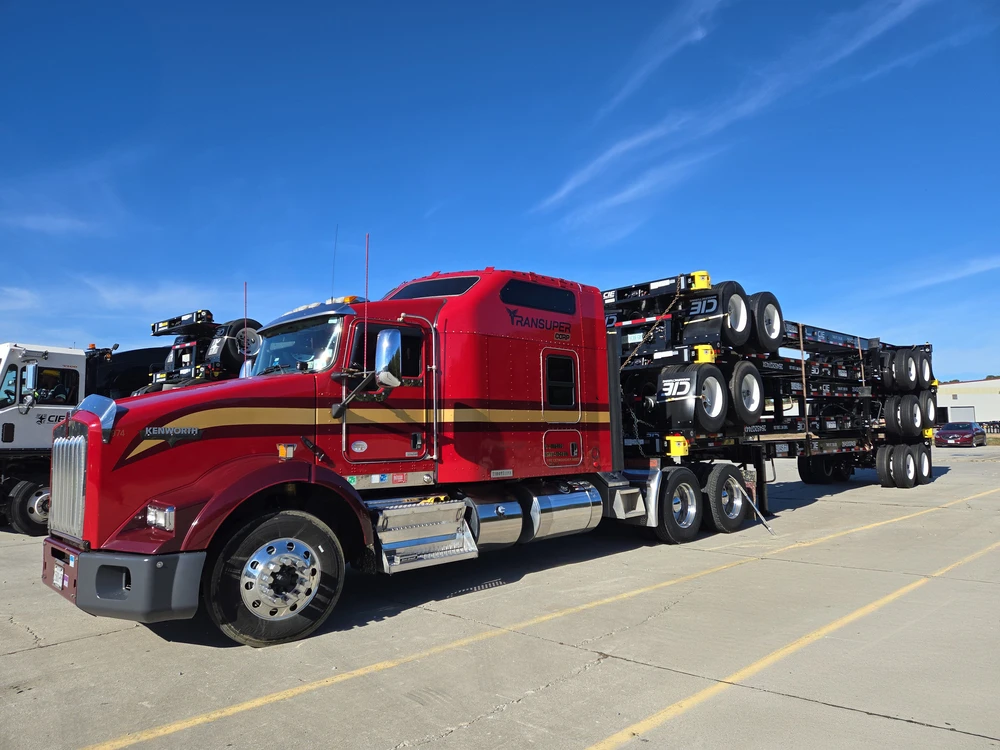
Container chassis are essential in intermodal transportation because they enable shipping containers to transfer quickly between rail yards, final destinations, distribution centers, and ports with minimal delay. Logistics professionals, fleet managers, and owner-operators depend on selecting the right container chassis to meet regulations, improve safety, and boost operational efficiency. Numerous factors should be considered before purchasing or sourcing container chassis, with distinct characteristics that suit varying requirements. This guide explains the most common container chassis types. Understanding how these chassis types are used is important so users can match the right type to their needs. The following section is designed to help. The order has been rearranged for clarity. Operational settings, maintenance, and support are among the main factors to consider when choosing the appropriate chassis, though design features also matter.
What Is a Container Chassis?
A container chassis, commonly known as a trailer chassis or intermodal chassis, provides essential support for containers when transporting them along various American highways and is constructed of steel with a wheeled structure that extends the entire height of the platform during logistical operations. Engineered to meet strict criteria for weight distribution, regulatory compliance, and robustness, these chassis are frequently used in intermodal and port environments. Sometimes, operators must regularly perform wheel maintenance. Usually, freight is especially important for legal compliance.
Main Types of Container Chassis
Fixed-Length Container Chassis
For container transportation, fixed-length container chassis have been engineered for a single length, although some variants exist for other lengths, and maintenance is usually reduced by this design because extension parts are not included. Maintenance is reduced. These chassis offer simplicity and long-lasting construction.
Common use cases:
– Dedicated fleet operations
– Port drayage with consistent container sizes
– High-volume terminal operations
Extendable (Slider) Container Chassis
ontainer chassis are designed for each container size, allowing operations to adapt flexibly to the frequent changes in container length required by intermodal transport.
Benefits include:
– Flexibility for mixed container loads
– Reduced need for multiple chassis types
– Efficient fleet utilization
Twenty-Foot Container Chassis
A container chassis with wheels can move standard ISO containers, which are also 20 feet long, and this design has been favored in many shipping operations worldwide due to its effectiveness in handling cargo in standardized formats and heavier loads.
Forty-Foot Container Chassis
Standard forty-foot containers are typically transported using a chassis designed to meet dimensional and load requirements. Used widely, the construction method allows stable support for freight, reducing risk during transit.
Key considerations:
– Weight ratings
– Bridge law compliance
– Container chassis dimensions
Tri-Axle Container Chassis
Three axles have been incorporated into a tri-axle chassis to accommodate heavier container loads. This is a vital component of the freight transportation system, where regulatory compliance must be strictly followed, and cargos may exceed the mass that single- or tandem-axle designs can efficiently carry.
Ideal for:
– Heavy cargo
– Port chassis operations
– Long-distance transport
Gooseneck Container Chassis
Containers manufactured with recessed gooseneck tunnels are moved using gooseneck container chassis, which distribute the load along the frame by using a design in which the central spine fits into the tunnel.
ISO Tank Chassis
Designed specifically for cylindrical tank containers, ISO tank chassis have been engineered to move liquids and gases, as well as mechanical components, which are integrated to ensure safe handling of such cargo.
Skeletal (Skeleton) Container Chassis
Skeletal trailers have been designed as lightweight frames used to transport containers, and they help improve efficiency, but this should have been noted carefully, as it impacts operational efficiency. They play a key role.
Intermodal Chassis vs. Container Trailers
Container trailers may feature mechanisms that are not found on container chassis. Although container chassis are designed for standardized ISO containers, each is optimized for distinct tasks. Selecting the correct equipment for their application becomes easier when operators know only the specifications of their containers.

Container Chassis Dimensions & Compliance
For all container chassis, federal and state transportation regulations must be complied with regarding dimensions, ground height, axle spacing, and braking systems, which must be strictly adhered to at the federal and state levels, ensuring operational permission on public roads and reducing potential incidents during transit.
Container Chassis Parts Overview
Key container chassis parts include:
– Frame and cross members
– Axles and suspension
– Landing gear
– Twist locks
– Braking systems
– Lighting and wiring
The chassis life is extended, and safety is improved by proper maintenance of these components.
How to Choose the Right Container Chassis
When selecting a container chassis, consider:
– Container size and weight
– Route and regulatory requirements
– Port and terminal standards
– Fleet flexibility needs
– Long-term maintenance costs
The selection process can often be simplified by working with experienced container chassis manufacturers.
FAQs About Container Chassis Types
What is the difference between a container chassis and a trailer?
Designated trailers support standardized shipping containers used in global logistics and are therefore built to precise specifications that fit these ISO containers.
How much does a container chassis cost?
Pricing depends on size, axle configuration, and market conditions.
Are intermodal chassis standardized?
Although most models are manufactured to DOT and ISO standards, different companies have their own standards. These standards provide.
Why Choose a Trusted Intermodal Chassis Manufacturer
Intermodal chassis manufacturers with experience offer equipment designed for durability, compliance, and the demands of logistics in actual operations, so customers benefit in many areas, such as uptime, safety, and improved return on investment. Safety is improved.

Call us on 877.711.0725 or look at our full lineup at
Contributor Information

Zhuangfan Li
Director of Engineering, Quality & Warranty – CIE Manufacturing
CIE Manufacturing benefits from Zhuangfan Li’s leadership in chassis engineering, as he leads quality and warranty initiatives, and advanced design, production, and quality processes are supervised diligently, while different process staff manage product innovation settings effectively. Products built are required to meet AAR, DOT, FMVSS, ISO, ANSI, SAE, and TTMA standards, and these specifications are supported by extensive process improvements focused on structural integrity, durability, and optimal weight calculations. His specialization includes finite element analysis (FEA), CAD design, welding, materials engineering, lean manufacturing, and additive manufacturing. His expertise has been applied in manufacturing, and prototype validations are led under his supervision. Chassis design supports functionality. Zhuangfan takes on key roles in the development of new products, the improvement of prototypes, and the adjustment of manufacturing processes in our operation. Weld integrity is ensured, transparency is shown throughout project phases, product durability is increased, and innovation is supported by advanced design tools.
Learn more: https://ciemanufacturing.com/zhuangfanli/